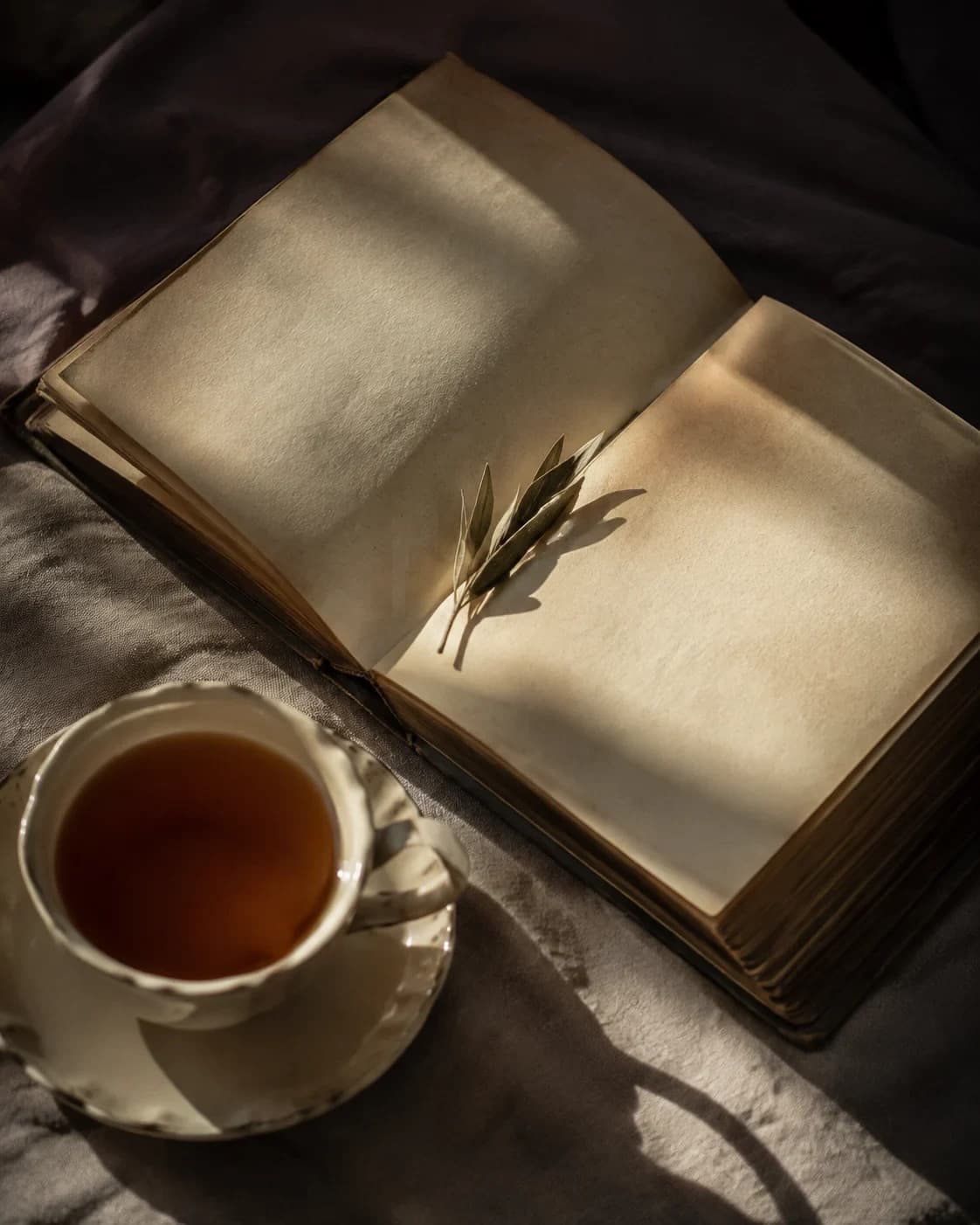
A reading notebook need not be a beautiful object. The handwriting can change halfway through a page. A word can be crossed out. There can be a shopping list in the back and a pressed leaf that keeps falling out.
What matters is the conversation it makes possible. A paragraph in a book suggests a thought; the pencil answers with something smaller and less certain. The margin becomes a place where understanding is allowed to be unfinished.
Returning to old notes can be unexpectedly tender. Some concerns have loosened their hold, while a few questions still feel fresh. The notes keep more than ideas. They keep traces of attention.
Handwriting is a small landscape of its own: lines that gather, pause, and begin again. Beside them, a pencil waits for the next thought. The leaf brings a little of the outside world onto the desk.
A useful note leaves a door open for the person we are becoming.
Three lines are enough
Try three small notes after reading: something you noticed, something you questioned, and something you want to try. Leave the rest of the page open.